English version El platonismo de la sintiencia (versión corta aquí) es la idea de que las experiencias existen por sí mismas, independientemente de los seres …
Sobre el platonismo de la sintiencia y la eliminación del sufrimiento del pasado

The intersection of Computer Science, Communication and Philosophy
English version El platonismo de la sintiencia (versión corta aquí) es la idea de que las experiencias existen por sí mismas, independientemente de los seres …
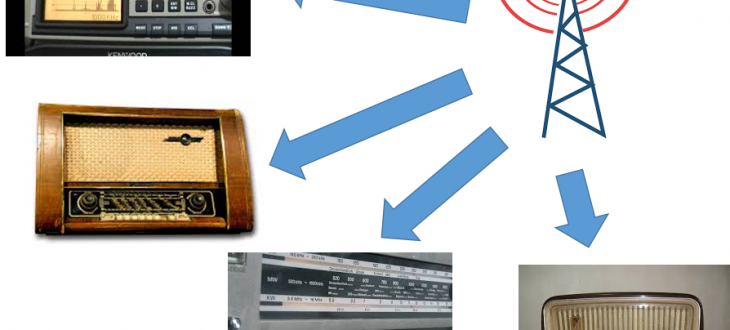
Versión en Español “… a crazy-sounding belief of mine that our physical world not only is described by mathematics, but that it is mathematics, making …
English version “… a crazy-sounding belief of mine that our physical world not only is described by mathematics, but that it is mathematics, making us …
Versión en Español Software is sometimes defined as “everything that can be transmitted over a telephone line” (as opposed to hardware, which is everything that …
English version El software se define a veces como “todo aquello que puede ser transmitido por una línea telefónica” (en oposición al hardware, que es …
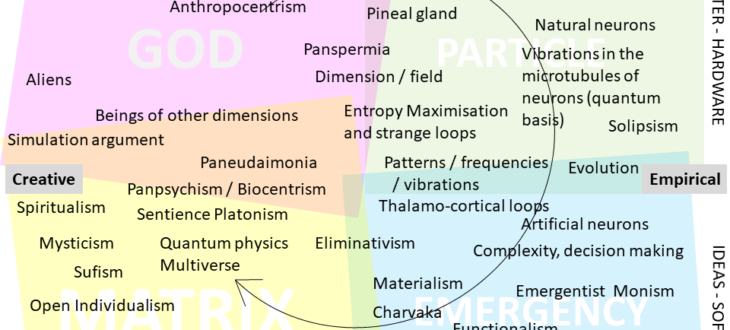
Theories and hypotheses about the ability to feel Versión en Español See also this other map In this image I try to present in a …
All the arguments are used to recognize sentience are based on some kind of “similarity” or “closeness” with oneself: same aspect, same behavior, genetic / evolutionary similarity or closeness, same utility, same necessity. All are “alike”. This is how we recognize, in fact, sentience in other beings. Why do we do it like this? The answer is in the “Street lamp principle”. We do so because we can do so. If we have lost the keys in the street, at night, first we look for them where there is light, because where there is light, we can see. This does not mean that underneath the streetlight is the most likely place where the keys are. Instead, under the streetlight it is the most likely place where we can find the keys.
La maoría de los argumentos que se emplean para reconocer la sintiencia están basados en algún tipo de “parecido” o “cercanía” con uno mismo: mismo aspecto, mismo comportamiento, parecido o cercanía genética / evolutiva, misma utilidad, misma necesidad. Todos son “parecidos”. Así es cómo reconocemos, de hecho, la sintiencia en otros seres. ¿Por qué lo hacemos así? La respuesta está en “el principio de la farola encendida”. Lo hacemos así porque podemos hacerlo así. Si hemos perdido las llaves en la calle, de noche, las buscamos donde hay luz, porque donde hay luz, podemos ver. Esto no quiere decir que debajo de la farola sea el lugar más probable donde estén las llaves. En cambio, debajo de la farola es el lugar más probable donde podremos encontrar las llaves.
Versión en español Just as there are argumentative fallacies and cognitive biases, I believe there are also existential fallacies and existential biases: false beliefs that …
English version Así como existen falacias argumentales y sesgos cognitivos, creo que existe también una suerte de falacias existenciales y sesgos existenciales: creencias falsas difíciles …