Versión en español Robert Anson Heinlein proposes in one of his novels (Time Enough for Love?) an anesthesia that does not eliminate pain, but the …
Empty, Open and Closed Individualism
The intersection of Computer Science, Communication and Philosophy
Versión en español Robert Anson Heinlein proposes in one of his novels (Time Enough for Love?) an anesthesia that does not eliminate pain, but the …
English version Robert Anson Heinlein propone en una de sus novelas (¿Tiempo para amar?) una anestesia que no elimina el dolor, sino el recuerdo del …
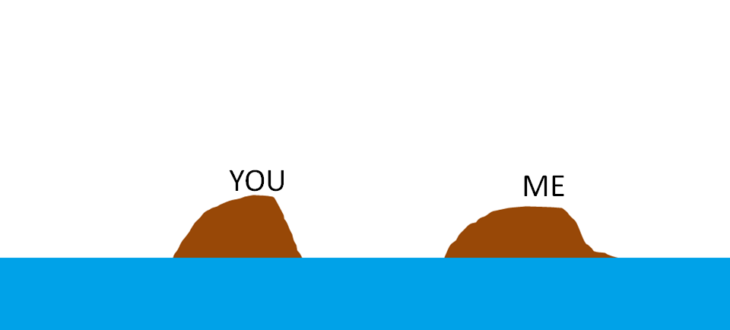
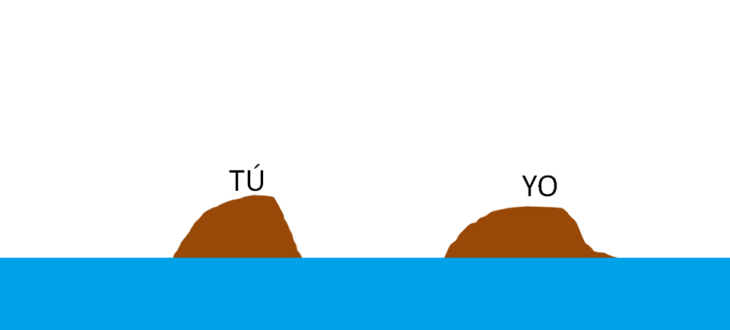
Versión en español 1. The drop and the sea (sufi symbolism) Source: Sentience platonism and Symmetry between emergentism and immersionism 2. The islands …
English version 1. La gota y el mar (simbolismo sufi) Fuente: Platonismo sentiente y Simetría entre emergentismo e inmersionismo 2. Las islas …
All the arguments are used to recognize sentience are based on some kind of “similarity” or “closeness” with oneself: same aspect, same behavior, genetic / evolutionary similarity or closeness, same utility, same necessity. All are “alike”. This is how we recognize, in fact, sentience in other beings. Why do we do it like this? The answer is in the “Street lamp principle”. We do so because we can do so. If we have lost the keys in the street, at night, first we look for them where there is light, because where there is light, we can see. This does not mean that underneath the streetlight is the most likely place where the keys are. Instead, under the streetlight it is the most likely place where we can find the keys.
La maoría de los argumentos que se emplean para reconocer la sintiencia están basados en algún tipo de “parecido” o “cercanía” con uno mismo: mismo aspecto, mismo comportamiento, parecido o cercanía genética / evolutiva, misma utilidad, misma necesidad. Todos son “parecidos”. Así es cómo reconocemos, de hecho, la sintiencia en otros seres. ¿Por qué lo hacemos así? La respuesta está en “el principio de la farola encendida”. Lo hacemos así porque podemos hacerlo así. Si hemos perdido las llaves en la calle, de noche, las buscamos donde hay luz, porque donde hay luz, podemos ver. Esto no quiere decir que debajo de la farola sea el lugar más probable donde estén las llaves. En cambio, debajo de la farola es el lugar más probable donde podremos encontrar las llaves.
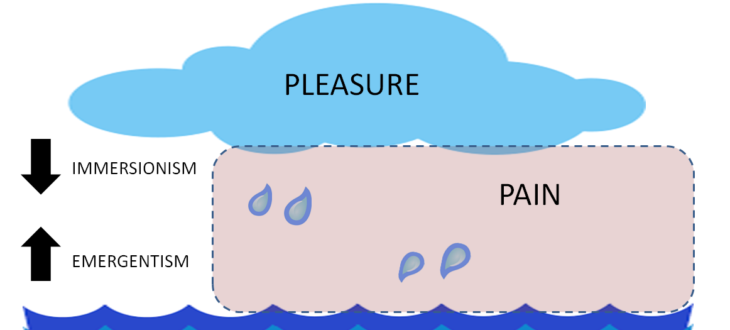
Versión en español I consider myself basically a negative utilitarian-ish. That is, I consider that to avoid suffering is the highest moral priority, and that …
English version Me considero básicamente algo parecido a un utilitarista negativo. Esto es, considero que evitar el sufrimiento es la mayor prioridad moral, y que …

Versión en español Even if the probability of Sentience Platonism were extremely small, while there is a higher than zero probability, and considering that is …

English version Incluso aunque la probabilidad del platonismo sentiente fuera extremadamente pequeña, mientras exista una probabilidad mayor que cero, y teniendo en cuenta que no …